Custom FAQs
1. What types of silk fabrics are best suited for printed ties, and how do they affect the final print quality and drape?
For printed ties, we primarily recommend Silk Twill for its smooth, matte surface that provides excellent color absorption and sharp print definition, and Silk Crepe de Chine for a slightly textured, fluid drape that gives prints a softer, more artistic appearance. The fabric choice directly impacts the vibrancy, clarity, and hand-feel of the final product.
2. What printing technology do you use, and what are the advantages for complex or gradient designs?
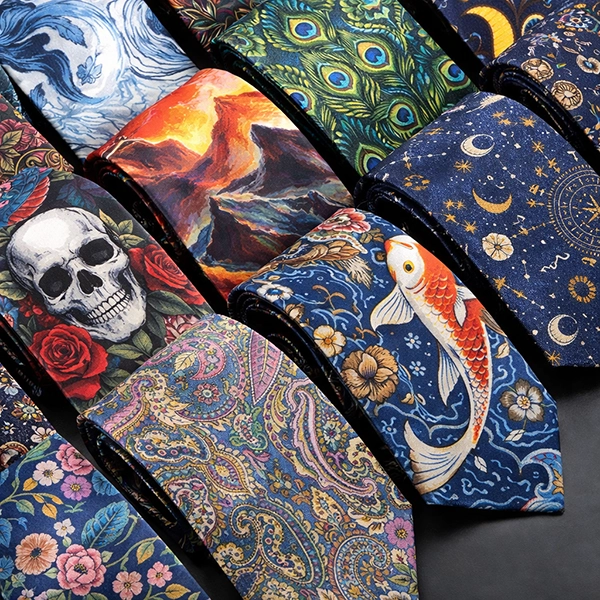
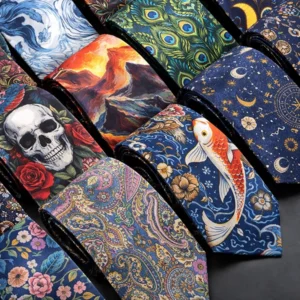
We utilize advanced digital pigment printing technology. This method allows for unlimited colors and photorealistic detail without the cost or minimums associated with traditional screen printing setups. It is ideal for intricate patterns, subtle gradients, and highly detailed artwork, ensuring each tie is a true reproduction of your design.
3. Can you print on both sides of the tie, and how do you ensure pattern alignment at the seam?
We offer full double-sided printing as a premium option. To ensure perfect pattern continuity, we use a precision cutting and matching process where the fabric is printed as a whole piece before being cut on the bias. Our markers are meticulously aligned to guarantee the pattern flows seamlessly across the tie’s center seam.
4. What is your process for color matching, especially for brand-specific Pantone colors?
Our color management process is rigorous. We work from your provided Pantone (PMS) codes to create custom ink profiles. We then provide a digital color proof followed by a physical print strike-off on the actual silk fabric for your approval before any bulk printing begins, ensuring a perfect match.
5. What is your minimum order quantity (MOQ) for custom printed ties, and can we combine multiple designs in one order?
Our MOQ for a custom print design starts at 150 pieces. We encourage collection development by allowing you to combine multiple designs into a single production run to meet the minimum. This is an efficient way to launch a capsule collection with lower risk.
6. How do you construct the tie to complement the printed fabric? What interlining do you use?
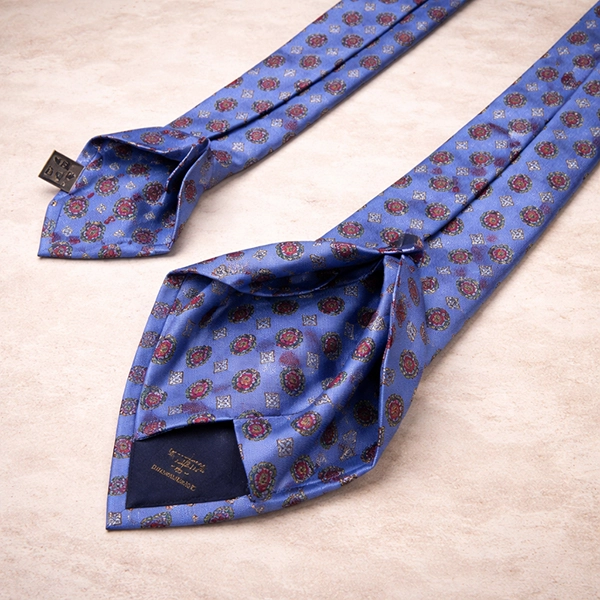
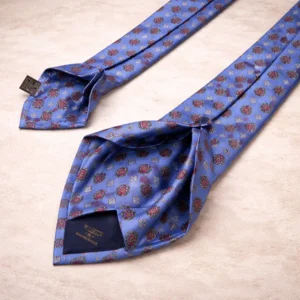
We use a 3-fold construction with a lightweight, resilient wool interlining. This construction provides the necessary body for a clean knot without adding stiffness that could crack the print. The interlining is specifically chosen to allow the printed silk to drape naturally and maintain the integrity of the design.
7. Can you accommodate custom branding on the tipping or labels?
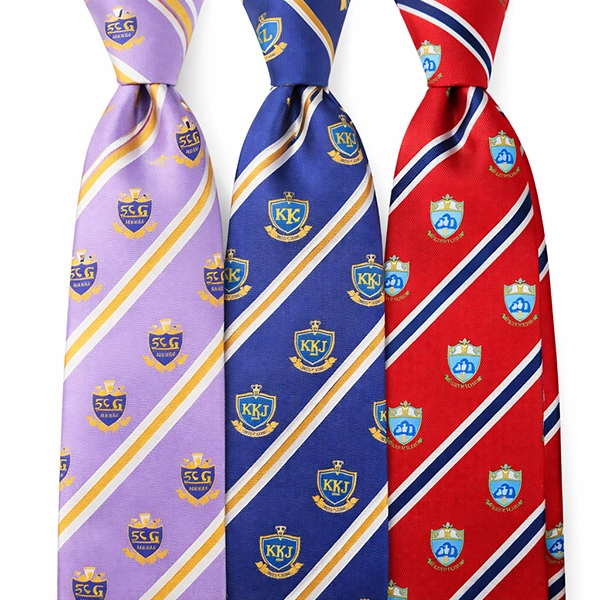
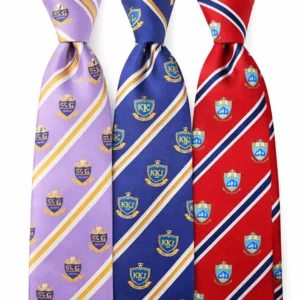
Absolutely. We offer several discrete branding options: printed or woven custom labels on the back of the tie, contrast tipping in a solid color with a hidden brand mark, or a custom hangtag. These elements are integrated during manufacturing.
8. What is your sampling process and timeline before committing to bulk production?
We follow a clear two-step sampling process: First, a Print Strike-Off Sample on fabric (7-10 days) for color and pattern approval. Second, a Full Production Prototype tie (10-12 days after strike-off approval). This ensures you can evaluate everything from color accuracy to final construction before your bulk order is produced.
Custom Tips
Before placing your custom order, the following tips will help you understand how to create the perfect Printed Silk Tie for your collection and ensure a smooth production process.
1. Choose Your Silk Fabric
Select the ideal base fabric for your design: Silk Twill for a smooth, matte surface that ensures sharp print definition, or Silk Crepe de Chine for a lightweight, fluid drape that gives prints a soft, artistic quality.
2. Provide High-Resolution Artwork
Submit your design as a vector file (AI/EPS) or a high-resolution image (300+ DPI). Ensure the artwork is sized and oriented correctly for the tie’s dimensions, and consider how the pattern will flow when the fabric is cut on the bias and folded.
3. Select Your Printing Method
Confirm the printing technique: Digital Printing for complex, multi-color designs with unlimited hues and gradients, or Silk-Screen Printing for vibrant, solid-color patterns and special effects. We will recommend the best option based on your design.
4. Specify Colors with Pantone Codes
Provide exact Pantone (PMS) color codes for each hue in your design. We will generate a digital color proof and, upon approval, a physical print strike-off on your chosen silk to guarantee color accuracy before production.
5. Confirm Tie Dimensions and Construction
Specify the tie’s standard or custom width and length. Choose the construction: we recommend a 3-fold build with lightweight wool interlining to ensure a clean knot while preserving the drape and integrity of the printed fabric.
6. Decide on Finishing and Branding Details
Select finishing options such as self-fabric or contrast tipping, and specify any custom branding like a woven label on the back blade or a branded hangtag for a polished, professional presentation.
7. Plan Your Order Quantities
Indicate the total order quantity and provide a clear breakdown by design and colorway. This helps us optimize material usage, printing schedules, and provide you with the most accurate pricing.
8. Approve a Physical Prototype
We strongly recommend ordering a complete physical prototype tie before bulk production. This allows you to evaluate the print quality, color fidelity, fabric hand, construction, and overall aesthetic, ensuring the final product perfectly matches your vision.